B2B Textile Insights
How to Source Bed Linen from Egypt: A B2B Buyer Guide
A well-prepared brief makes bed linen enquiries easier to evaluate. Use this guide to organize the decisions needed for Egyptian manufacturing, from the individual product specification to packaging, approval and export coordination.
1. Define the Products and Intended Use
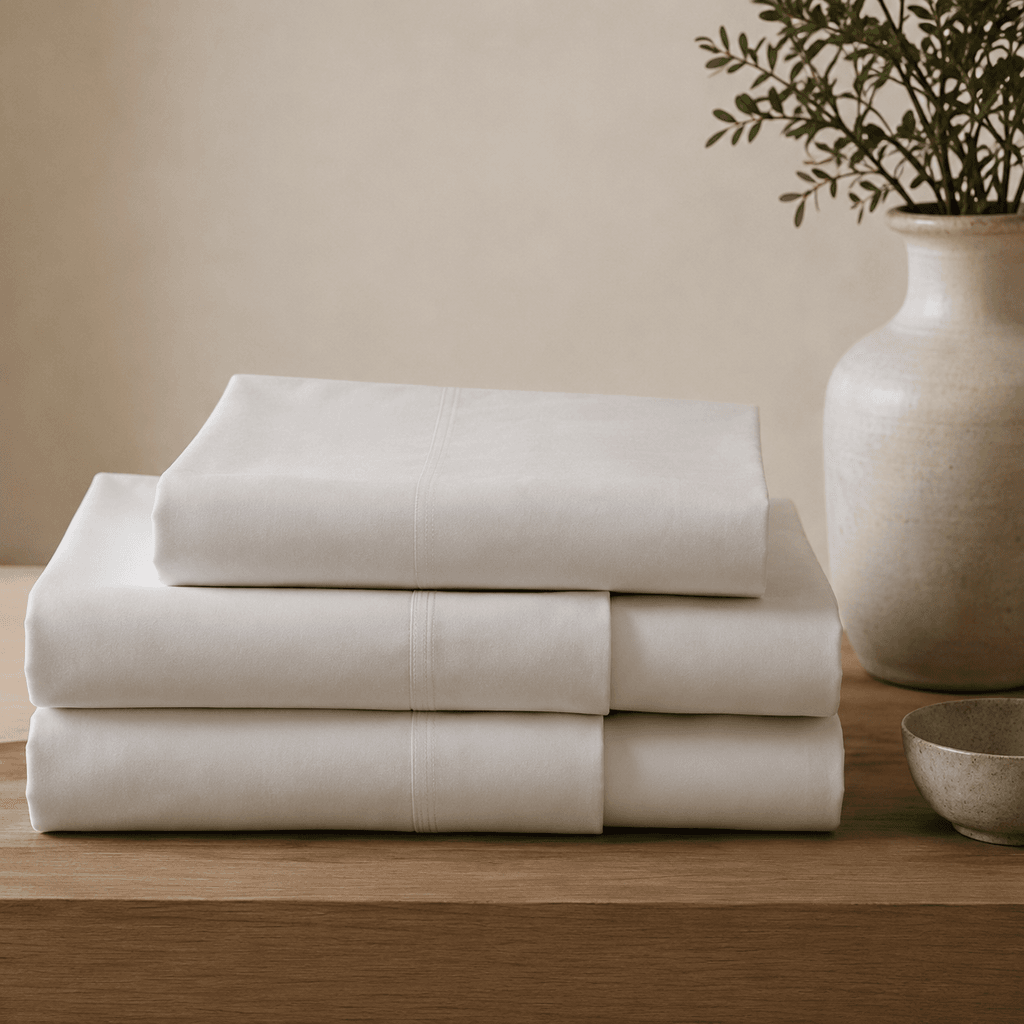
List flat sheets, fitted sheets, duvet covers and pillowcases as separate items. State whether you are planning retail packs, a wholesale assortment or a hospitality program. Include quantities by item, size and colour rather than a single total for an undefined collection.
If you add towels, filled pillows or duvet inserts, write separate specifications for them. Shell, fill and towel construction cannot be inferred from a cotton sheet brief. Identify the destination market and distinguish essential requirements from options you want reviewed.
2. Record Exact Dimensions
Give finished measurements in centimetres. For fitted sheets, include mattress width, length, depth and any topper. For duvet covers, state the insert dimensions and the required finished cover size. For pillowcases, identify the pillow space, style and any flange detail.
Single, Double, Queen and King names vary across markets. Measurements and a clear size schedule give production and purchasing teams a more reliable reference. Include drawings or references where they clarify the construction you are requesting.
3. Specify Fabric, Weave and Thread Count
Separate 100% cotton composition from Egyptian cotton origin requirements and manufacturing country. Select the proposed weave and confirm thread count where the product specification uses it. Nile Bridge Trade sheet data lists sateen and percale, with 300 TC as a reference and 200 TC / 400 TC options; Egyptian cotton is listed from 300 TC as a premium option.
Ask for the actual fabric combination to be confirmed in the quotation. Include colour references, finishing and care expectations so the discussion covers the full product rather than only a thread count number.
4. Prepare Branding and Packaging Requirements
Provide label artwork, label placement, fibre wording, care information and size identifiers. List set contents and pack quantities explicitly. Describe retail packaging and export carton marks, including any item references used by your warehouse or distribution customers.
Keep artwork consistent with the approved product specification. If your brand will use origin or certification wording, request applicable evidence before approving the design. Exact packaging materials and carton details should be confirmed with the final item schedule.
5. Agree Samples and Approval Criteria
Sample availability, costs and timing are reviewed for the selected project. State what you want to evaluate: construction, dimensions, colour, finishing or the complete pack. Record approval notes against the agreed reference and identify changes clearly.
Discuss testing and documentation needs before production is confirmed. A sample is useful for review, but it should sit alongside a written specification that identifies the product to be manufactured and the requirements accepted by both parties.
6. Compare Quotations on the Same Basis
Use one item schedule and specification set when reviewing offers. Confirm what the quotation includes, how packaging is described and whether sample or testing arrangements have separate terms. Order quantities and production timing depend on the product, specification and quantity.
If you request alternatives, keep each option identifiable. A different weave, set quantity or packing format changes what is being compared. Review specification changes before treating a revised offer as equivalent to the original proposal.
7. Confirm Export and Delivery Arrangements
Provide the destination and preferred delivery terms. Agree the required commercial and shipping documents, carton marks and responsibilities before dispatch. Separate production timing from transport timing and confirm both for the actual order.
European and other international buyers should identify destination-specific documentation and labelling needs early. Explore the export process page for the existing coordination approach and contact Nile Bridge Trade with your completed brief. A clear product schedule, artwork and destination make the manufacturing and quotation discussion more useful.
Next step
Request Specifications & a Quotation
Share products, dimensions, fabric, colours, quantities, branding, packaging and destination so we can review your textile requirements.